

Why Automate Beverage Production for Efficiency
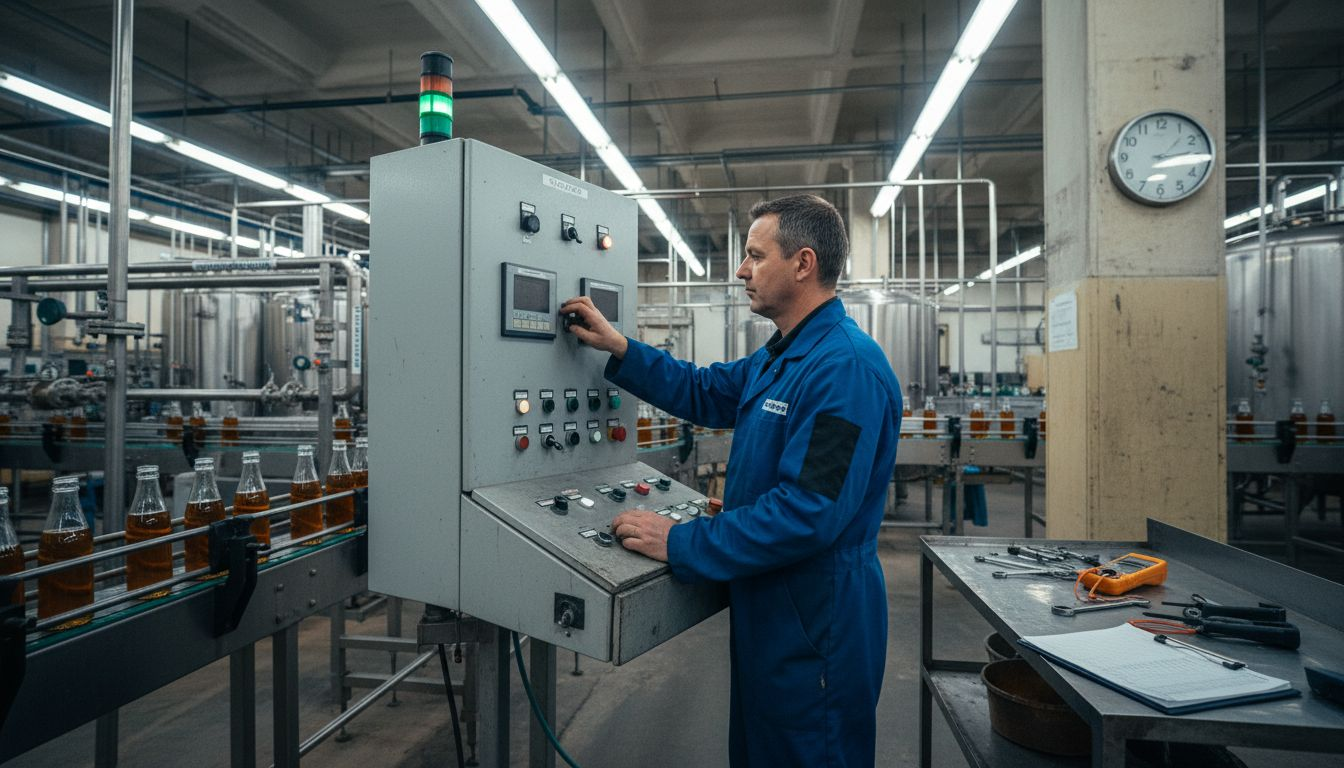
Every production manager knows the frustration when manual processes slow down brewery or distillery operations, causing unnecessary delays and waste. As competition increases across North American and European beverage markets, the pressure to deliver consistent quality while controlling costs grows stronger. Automated beverage production systems now give mid-sized facilities the power to improve operational efficiency, minimize human error, and keep pace with demanding business goals without sacrificing product excellence.
Table of Contents
- Defining Automated Beverage Production Systems
- Major Types of Beverage Automation Technologies
- Key Benefits: Efficiency, Yield, and Quality
- Real-World Applications In Breweries And Distilleries
- Cost, Implementation Needs, And Common Pitfalls
Key Takeaways
| Point | Details |
|---|---|
| Integration of Advanced Technologies | Automated beverage production systems utilize AI, sensor networks, and real-time data communication for optimized manufacturing processes. |
| Enhanced Operational Efficiency | Automation leads to continuous production capabilities, reduced labor costs, and minimized downtime in beverage manufacturing. |
| Quality Control Advancements | Implementing automated systems enhances consistency in product quality through real-time monitoring and precise control mechanisms. |
| Strategic Implementation Planning | Manufacturers must analyze financial, technical, and operational aspects before adopting automation to ensure successful integration and avoid common pitfalls. |
Defining Automated Beverage Production Systems
Automated beverage production systems represent a sophisticated technological approach that transforms traditional manufacturing processes through advanced digital integration. These intelligent production platforms leverage cutting-edge technologies to optimize every stage of beverage creation, from ingredient selection to final packaging.
At their core, these systems incorporate multiple critical technologies:
- Industrial automation hardware like programmable logic controllers (PLCs)
- Real-time data communication protocols
- Artificial intelligence algorithms for process optimization
- Sensor networks for continuous monitoring and tracking
The fundamental goal of automated beverage production systems is dramatically enhancing operational efficiency through digitized, interconnected manufacturing processes. By integrating multi-agent systems and standardized communication frameworks, manufacturers can achieve unprecedented levels of precision and productivity.
Modern automated systems go far beyond simple mechanization. They represent a holistic approach to production that combines hardware, software, and intelligent decision-making capabilities. Production managers can now monitor every aspect of beverage manufacturing in real-time, identifying potential bottlenecks and optimizing resource allocation with unprecedented granularity.
Key Technological Components:
- Robotic filling and packaging equipment
- Advanced sensor arrays
- Machine learning analytics platforms
- Remote monitoring dashboards
- Predictive maintenance systems
These technologies work synergistically to reduce human error, minimize contamination risks, and dramatically improve overall production efficiency. Small and medium-sized beverage manufacturers particularly benefit from these advanced automation strategies, allowing them to compete more effectively with larger industry players.
Here's a summary of how key automation technologies impact beverage production:
| Technology Component | Main Function | Business Impact |
|---|---|---|
| Artificial Intelligence | Process optimization | Higher output quality and reduced waste |
| Real-Time Data Communication | Instant system feedback | Faster issue detection and response |
| Sensor Networks | Condition & quality monitoring | Fewer defects and safer products |
| Robotic Equipment | Automatic packaging/filling | Lower labor costs, increased throughput |
Pro tip: Conduct a comprehensive audit of your current production infrastructure before implementing automated systems to identify the most strategic integration points.
Major Types of Beverage Automation Technologies
Beverage automation technologies represent a sophisticated spectrum of digital solutions designed to revolutionize production processes across multiple manufacturing domains. Integrated production systems encompass comprehensive technological frameworks that transform traditional beverage manufacturing into intelligent, data-driven operations.
The primary categories of beverage automation technologies include:
- Ingredient Preparation Systems
- Precise material weighing and mixing equipment
- Automated ingredient dispensing platforms
- Real-time ingredient quality monitoring
- Processing Automation
- Pasteurization control systems
- Fermentation temperature management
- Carbonation precision technologies
- Packaging Automation
- Robotic filling mechanisms
- Automated bottling and sealing equipment
- Quality inspection and sorting technologies
Monitoring and Control Technologies play a critical role in modern beverage production. These advanced systems leverage sophisticated sensor networks, machine learning algorithms, and real-time data analytics to provide unprecedented visibility into manufacturing processes. Production managers can now track every metric, from ingredient composition to final product quality, with remarkable precision.

Each automation technology serves a specific purpose in streamlining beverage production. Ingredient preparation systems ensure consistent product quality by maintaining exact formulation standards. Processing automation technologies optimize critical transformation stages like fermentation and carbonation. Packaging automation guarantees product integrity, reduces human error, and increases overall production efficiency.
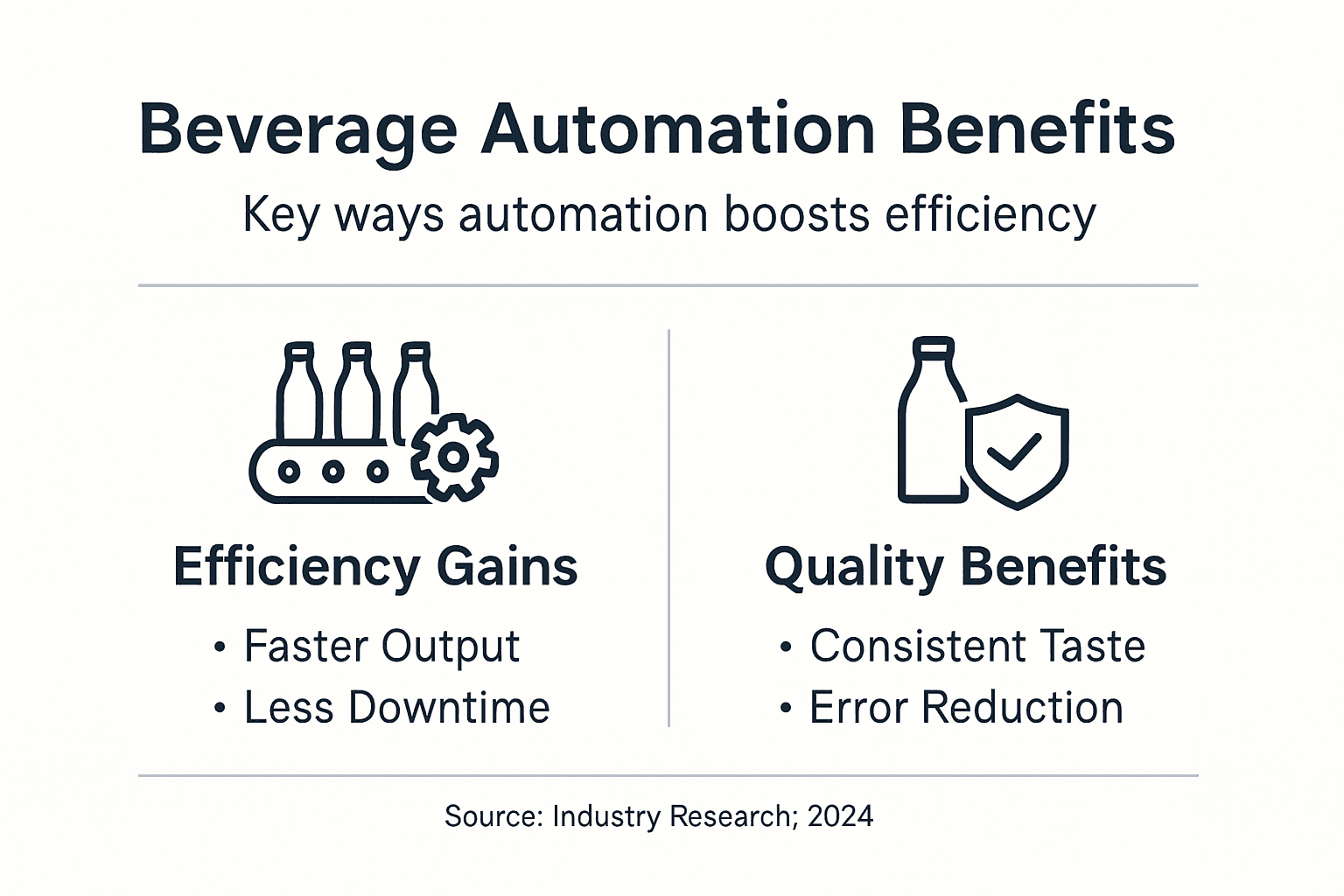
Compare traditional vs. automated beverage production approaches:
| Aspect | Traditional Production | Automated Production |
|---|---|---|
| Labor Reliance | Manual, labor-intensive tasks | Technology-driven, minimal labor |
| Process Control | Periodic manual checks | Continuous real-time monitoring |
| Error Risk | Higher due to human mistakes | Lower; systems detect anomalies |
| Scalability | Difficult; slow adaptation | Flexible; easy to upscale |
Automation technologies are not just about replacing human labor, but about enhancing precision, consistency, and scalability in beverage manufacturing.
Small and medium-sized beverage manufacturers can particularly benefit from these technologies, enabling them to compete effectively with larger industry players by implementing flexible, intelligent production systems that adapt quickly to changing market demands.
Pro tip: Evaluate your current production workflow and identify specific bottlenecks where targeted automation technologies can deliver the most significant efficiency improvements.
Key Benefits: Efficiency, Yield, and Quality
Automation technologies in beverage production fundamentally transform manufacturing capabilities by delivering unprecedented improvements in operational performance. These advanced systems go beyond simple mechanization, creating a comprehensive approach to production that addresses critical business challenges across efficiency, product yield, and quality dimensions.
The key benefits of beverage production automation can be categorized into three primary domains:
Operational Efficiency
- Continuous 24/7 production capabilities
- Reduced manual labor requirements
- Minimized downtime between production runs
- Streamlined workflow management
Product Yield Optimization
- Precise ingredient measurement
- Consistent batch processing
- Reduced material waste
- Enhanced resource utilization
Quality Control Enhancements
- Real-time monitoring systems
- Standardized production parameters
- Early defect detection
- Consistent product characteristics
Efficiency Metrics represent a critical advantage of automation technologies. By eliminating manual interventions and implementing intelligent control systems, manufacturers can significantly reduce operational costs while dramatically increasing production throughput. Advanced automation enables precise tracking of every production parameter, creating a data-driven environment where performance optimization becomes a continuous, measurable process.
Automation is not just a technological upgrade; it's a strategic transformation of manufacturing capabilities.
Quality control represents another profound benefit of beverage production automation. Sophisticated sensor networks and machine learning algorithms ensure that each production batch meets exact specifications. This level of consistency reduces product recalls, enhances consumer trust, and creates a competitive advantage for manufacturers willing to invest in intelligent production technologies.
Pro tip: Conduct a comprehensive baseline assessment of your current production metrics before implementing automation to accurately measure and validate efficiency improvements.
Real-World Applications in Breweries and Distilleries
Digital transformation in beverage production is revolutionizing how breweries and distilleries approach manufacturing, enabling unprecedented levels of precision, efficiency, and customization. Automation technologies are no longer optional upgrades but essential strategic investments for manufacturers seeking to remain competitive in an increasingly complex global market.
Specific real-world applications of automation in beverage production include:
Fermentation Process Control
- Continuous temperature monitoring
- Precise yeast management
- Automated pH and gravity tracking
- Real-time fermentation performance analytics
Ingredient Handling and Preparation
- Automated grain and malt weighing
- Precise liquid ingredient dispensing
- Consistent hop addition protocols
- Standardized recipe execution
Quality Assurance Systems
- Automated sensory parameter tracking
- Batch consistency verification
- Early contamination detection
- Statistical process control
Breweries and Distilleries are increasingly leveraging advanced automation to create more sophisticated, data-driven production environments. By implementing intelligent monitoring systems, manufacturers can optimize every stage of production, from raw ingredient selection to final packaging, ensuring consistent product quality and minimizing operational inefficiencies.
Automation transforms breweries from traditional manufacturing facilities into high-tech, data-driven production centers.
The most innovative breweries and distilleries are now using digital twin technologies and AI-supported modeling to simulate and optimize production processes. These advanced systems enable manufacturers to experiment with new recipes, predict potential production challenges, and make real-time adjustments without risking product quality or wasting resources.
Pro tip: Prioritize incremental automation implementation, starting with the most inefficient or error-prone production stages to maximize initial return on investment.
Cost, Implementation Needs, and Common Pitfalls
Implementing automated beverage systems requires strategic planning and a comprehensive understanding of both technological and financial implications. Manufacturers must carefully evaluate their specific production requirements, existing infrastructure, and long-term operational goals before investing in automation technologies.
Key implementation considerations include:
Financial Investment
- Initial hardware procurement costs
- Software licensing and integration expenses
- Training and workforce development
- Ongoing maintenance and upgrade budgets
Technical Infrastructure
- Compatibility with existing production equipment
- Network and communication protocol requirements
- Data management and storage capabilities
- Cybersecurity and system protection measures
Operational Readiness
- Staff technical skill assessment
- Change management strategies
- Phased implementation approach
- Performance monitoring mechanisms
Cost Structures vary significantly depending on the scale and complexity of automation technologies. Small and medium-sized beverage manufacturers can leverage modular and scalable solutions that allow incremental investments, reducing the financial barrier to entry. These flexible systems enable producers to start with core automation features and expand capabilities as their operational needs evolve.
Successful automation implementation is not about complete replacement, but strategic technological enhancement.
Common pitfalls in beverage production automation often stem from inadequate planning and unrealistic expectations. Manufacturers frequently underestimate the complexity of integrating diverse machinery interfaces and the importance of comprehensive staff training. Effective implementation requires a holistic approach that balances technological investment with human expertise and organizational adaptability.
Pro tip: Conduct a thorough skills gap analysis and develop a comprehensive training program before implementing automation technologies to ensure smooth organizational transition.
Unlock New Levels of Efficiency with Smart Beverage Automation
The challenge of achieving consistent quality while maximizing efficiency is a critical concern for beverage producers. This article highlights how automated beverage production systems, with their precision and real-time monitoring, play a vital role in minimizing human error and reducing operational costs. If you want to enhance your production yield while gaining deep insights into every stage from ingredient preparation to packaging, advanced AI-driven solutions are key.
PLAATO offers an industrial AI platform that seamlessly integrates with your existing equipment like PLCs and ERP systems to deliver comprehensive data analysis, predictive maintenance, and batch tracking. Producers in breweries, distilleries, and beverage manufacturing can significantly reduce downtime and waste by leveraging tailored automation tools. See proven results and innovative practices through PLAATO's Ultimate Guide To Unlocking Your Production Data With AI.
Take control of your production line today with PLAATO. Visit our site to explore how our scalable platform empowers you to transform your beverage production for efficiency, quality, and consistency. Don’t wait to start optimizing your operations — your next breakthrough in manufacturing performance starts here.
Frequently Asked Questions
What are automated beverage production systems?
Automated beverage production systems are advanced technological setups that enhance traditional manufacturing processes by incorporating digital integration and smart technologies to optimize every stage of beverage creation.
How do automation technologies improve operational efficiency in beverage production?
Automation technologies improve operational efficiency by enabling continuous production, reducing manual labor, minimizing downtime, and streamlining workflows, which collectively lead to lower operational costs and increased output.
What are the key benefits of automating beverage production?
The key benefits include enhanced operational efficiency, optimized product yield, and improved quality control, resulting in consistent product characteristics and reduced defects.
What common pitfalls should manufacturers avoid when implementing automation?
Manufacturers should avoid pitfalls like inadequate planning, underestimating integration complexities, and neglecting staff training, as these can hinder successful implementation and lead to operational challenges.
Recommended
- PLAATO Homepage – explore what's possible and talk to the team today.
