

How to Optimize Beverage Production for Maximum Efficiency
How to Optimize Beverage Production for Maximum Efficiency
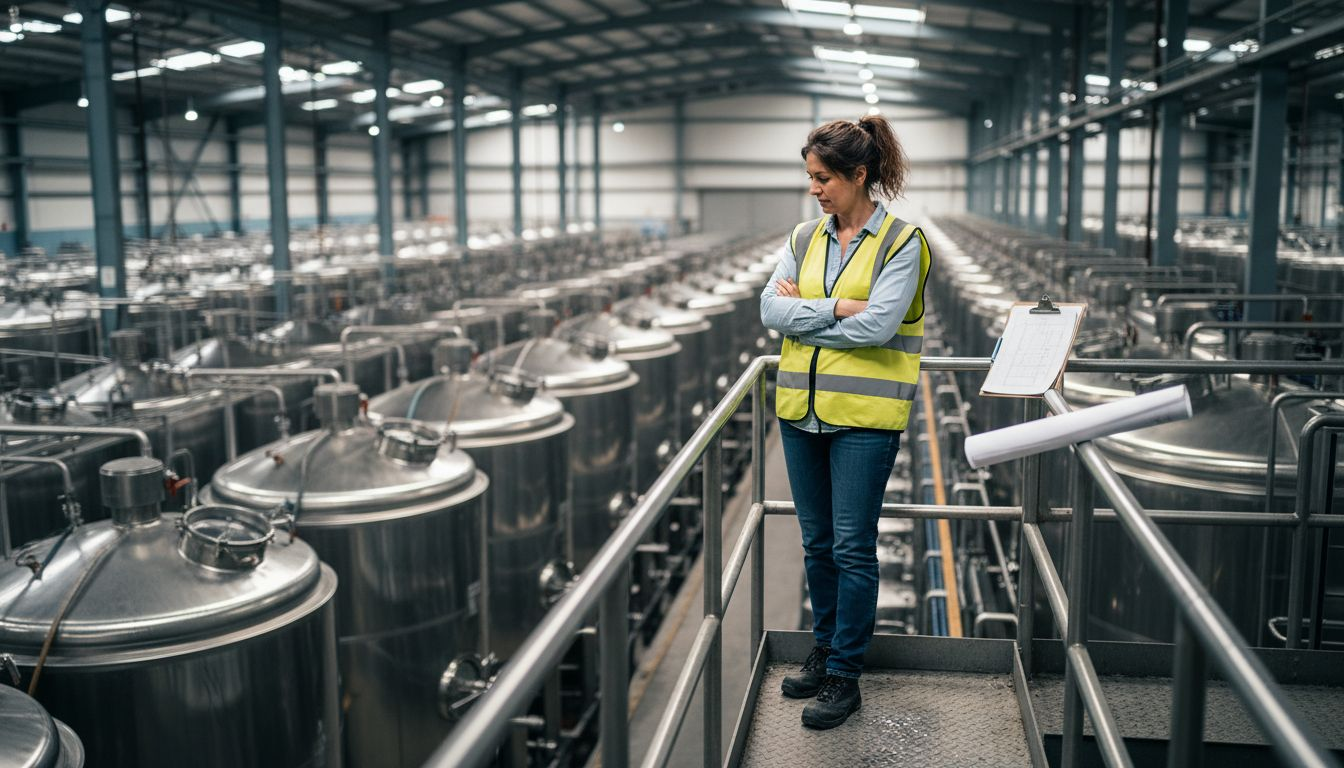
Reducing waste and controlling rising costs can feel like a daily challenge for production managers in busy breweries and RTD facilities. Every stage, from raw ingredient intake to packaging, depends on efficient systems and accurate data. By focusing on production process mapping and modern digital tools, you can uncover hidden inefficiencies and build a solid foundation for continuous improvement. This guide offers practical, actionable steps to help you create smarter, more cost-effective beverage production—while maintaining the quality your customers expect.
Table of Contents
- Step 1: Assess Current Production Processes And Data Sources
- Step 2: Integrate AI-Powered Sensors And Automation Platforms
- Step 3: Streamline Recipe Management And Batch Tracking
- Step 4: Automate Real-Time Monitoring And Anomaly Detection
- Step 5: Verify And Maintain Consistent Product Quality
Quick Summary
| Key Insight | Explanation |
|---|---|
| 1. Assess Current Processes | Evaluate existing workflows and data systems for optimization opportunities. |
| 2. Integrate AI-powered Sensors | Use advanced sensors for real-time data on production performance. |
| 3. Streamline Recipe Management | Digitize recipe documentation to ensure consistency and efficiency. |
| 4. Implement Anomaly Detection | Set up systems to monitor production, enabling proactive quality control. |
| 5. Maintain Quality Assurance | Develop a comprehensive framework to monitor and verify product quality consistently. |
Step 1: Assess current production processes and data sources
Effective beverage production optimization starts with a comprehensive assessment of your current operational landscape. This critical first step involves systematically evaluating your existing processes, data collection methods, and performance metrics to establish a baseline for future improvements.
Begin by conducting a detailed production process mapping exercise. This involves documenting each stage of your beverage manufacturing workflow, from raw ingredient intake to final packaging. Pay special attention to production planning decisions that impact resource management, quality control, and cost efficiency. Key areas to examine include:
- Raw material handling procedures
- Equipment utilization rates
- Current data tracking mechanisms
- Quality control checkpoints
- Inventory management systems
Next, perform a comprehensive data source audit. Identify all current data collection points within your production environment, including:
- Batch production records
- Equipment sensor logs
- Quality control test results
- Inventory management systems
- Historical sales and production databases
Accurate data collection is the foundation of meaningful process optimization.
The goal is to create a holistic view of your production ecosystem, understanding how each component contributes to overall efficiency. Look for gaps in data collection, inconsistent tracking methods, or manual processes that could be automated.
Pro tip: Invest in digital tracking tools that can consolidate and standardize data from multiple production sources, enabling more comprehensive and actionable insights.
Here’s a summary of key tools and their roles in beverage production optimization:
| Tool or Concept | Primary Role | Operational Benefit |
|---|---|---|
| Process Mapping | Identify workflow steps | Reveals inefficiencies |
| AI-powered Sensors | Collect real-time data | Enables immediate response |
| Recipe Management Systems | Digitally track formulations | Increases product consistency |
| Anomaly Detection Platforms | Monitor and flag process deviations | Prevents quality issues |
| Quality Assurance Framework | Set and ensure standards | Maintains customer trust |
Step 2: Integrate AI-powered sensors and automation platforms
Transforming your beverage production requires strategically implementing advanced sensor technologies and automation platforms that can capture and analyze critical operational data. The goal is to create a smart, responsive manufacturing ecosystem that can adapt and optimize in real time.
Start by identifying key areas where
- Temperature and humidity monitoring
- Equipment performance tracking
- Raw material quality assessment
- Production line speed and efficiency
- Energy consumption metrics
Implement your sensor network with a comprehensive approach that focuses on:
- Selecting compatible IoT-enabled sensors
- Ensuring seamless data transmission
- Creating centralized data collection platforms
- Developing real-time analytics dashboards
- Establishing automated alert mechanisms
AI-driven automation transforms raw data into actionable manufacturing intelligence.
Connect these sensors to advanced automation platforms that can process and interpret the collected information. This allows for predictive maintenance, quality control, and continuous process optimization. By creating an interconnected system, you’ll enable faster decision-making and more responsive production environments.
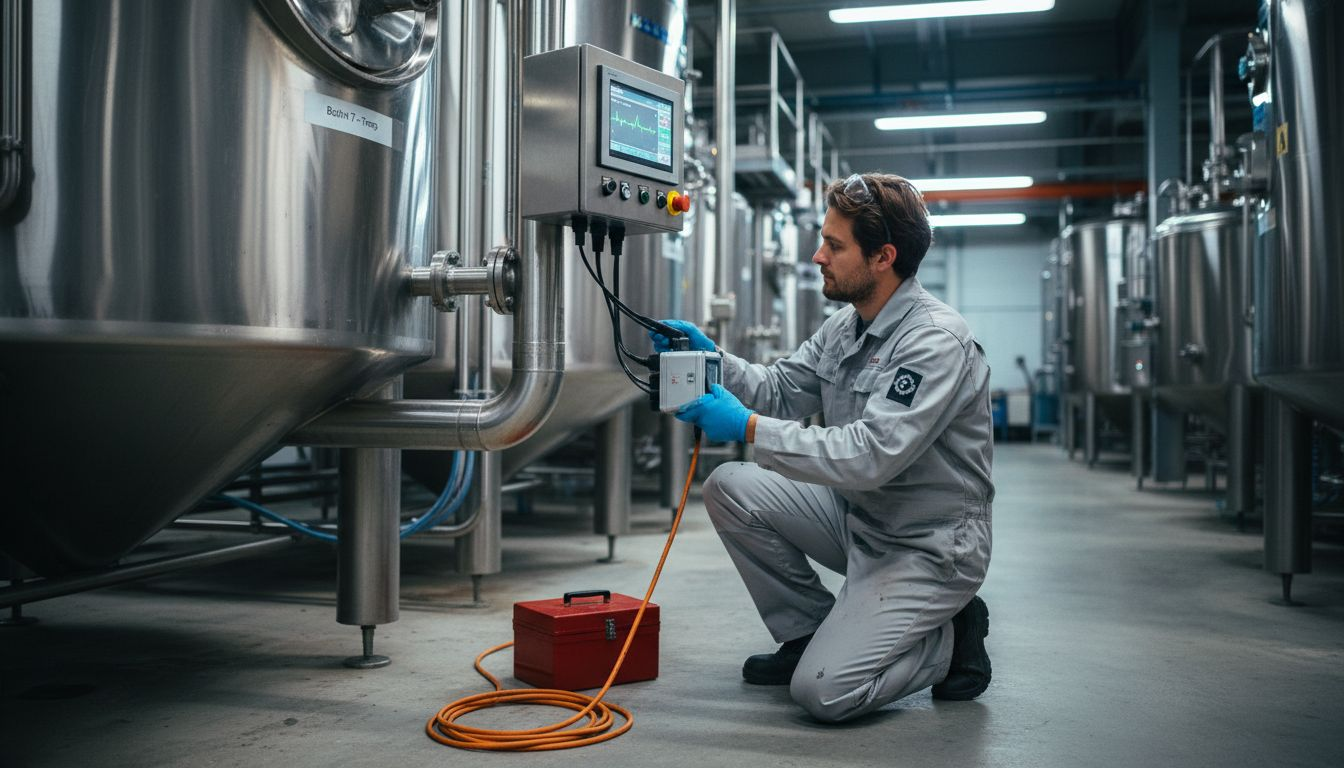
Pro tip: Choose modular sensor systems that can easily integrate with your existing infrastructure and scale as your production needs evolve.
Step 3: Streamline recipe management and batch tracking
Optimizing your beverage production requires a systematic approach to managing production schedules and batch tracking. This critical step transforms your manufacturing process by creating a comprehensive, digitized system for recipe documentation and performance monitoring.
Begin by developing a standardized recipe management framework that captures every nuance of your production process. This digital approach ensures consistent product quality and enables precise tracking across multiple production runs. Key components of an effective recipe management system include:
- Detailed ingredient specifications
- Precise measurement and mixing protocols
- Temperature and processing time parameters
- Quality control checkpoints
- Batch-specific variation tracking
Implement your tracking system through the following strategic steps:
- Digitize existing paper-based recipes
- Create a centralized recipe database
- Establish version control mechanisms
- Define standardized batch reporting templates
- Integrate real-time monitoring capabilities
Effective recipe management transforms variability into consistency.
Understand that batch tracking is more than documentation. It’s about creating a comprehensive view of your production ecosystem that enables continuous improvement, waste reduction, and quality optimization. By meticulously tracking each batch’s characteristics, you’ll build a powerful knowledge base for future production refinements.
Pro tip: Implement a dynamic recipe management system that allows quick modifications while maintaining full traceability of all historical changes.
Step 4: Automate real-time monitoring and anomaly detection
Advancing your beverage production requires implementing sophisticated <>anomaly detection systems for continuous monitoring. This critical step transforms your operational intelligence by creating a proactive, data-driven approach to quality control and equipment performance.
Develop a comprehensive real-time monitoring framework that captures and analyzes critical production variables. Your anomaly detection system should provide instant insights into potential deviations that could impact product quality or operational efficiency. Key monitoring elements include:
- Temperature fluctuations
- Pressure variations
- Flow rate inconsistencies
- Equipment performance metrics
- Ingredient quality parameters
Implement your automated monitoring strategy through these strategic steps:
- Install high-precision IoT sensors
- Configure real-time data streaming platforms
- Establish baseline performance metrics
- Create automated alert thresholds
- Develop rapid response protocols
Real-time monitoring transforms reactive management into predictive excellence.
Understand that effective anomaly detection goes beyond simple alerts. It’s about creating an intelligent system that not only identifies potential issues but provides actionable insights for immediate intervention. By continuously analyzing production data, you’ll build a robust mechanism for maintaining consistent product quality and operational efficiency.
Pro tip: Design your anomaly detection system with adaptive learning algorithms that can dynamically adjust detection thresholds based on historical production data.
Step 5: Verify and maintain consistent product quality
Ensuring exceptional beverage quality requires implementing a robust comprehensive quality assurance framework that spans every stage of production. This critical step transforms your manufacturing process by establishing systematic controls that guarantee consistent, reliable product performance.
Develop a strategic quality management approach that integrates multiple verification mechanisms. Your quality control strategy should address every aspect of production, from ingredient selection to final packaging. Key quality verification elements include:
- Raw material inspection protocols
- Sensory evaluation procedures
- Microbiological testing standards
- Flavor profile consistency checks
- Packaging integrity assessments
Implement a comprehensive quality verification process through these systematic steps:
- Define precise quality benchmarks
- Establish routine testing schedules
- Train quality control personnel
- Document all testing procedures
- Create continuous improvement protocols
Consistent quality is the cornerstone of customer trust and brand reputation.
Understand that maintaining product quality is an ongoing commitment. Your goal is to create a dynamic quality management system that not only detects potential issues but proactively prevents them. By integrating data-driven insights and rigorous testing protocols, you’ll build a reputation for unparalleled product consistency and excellence.
Pro tip: Develop cross-functional quality review meetings that bring together production, quality control, and management teams to holistically assess and improve product performance.
The following table highlights how automation transforms traditional beverage production tasks:
| Production Area | Manual Approach | Automated/AI-powered Approach |
|---|---|---|
| Data Collection | Paper logs, manual entry | IoT sensors and digital logging |
| Batch Tracking | Handwritten records | Real-time digital batch monitoring |
| Quality Control | Periodic manual testing | Continuous monitoring and instant alerts |
| Maintenance Scheduling | Reactive equipment service | Predictive, sensor-driven maintenance |
Unlock Maximum Efficiency in Beverage Production with PLAATO
Optimizing beverage production demands precise control over every step from recipe management to real-time anomaly detection. This article highlights the challenges of manual data collection, inconsistent batch tracking, and delayed quality assurance that cause inefficiencies and risk product consistency. At PLAATO, we understand these pain points and offer an advanced industrial AI platform designed specifically to address them with seamless integration of hardware sensors, automation, and data-driven insights.
Experience the power of:
- Real-time monitoring that transforms reactive management into predictive excellence
- Streamlined recipe and batch tracking for consistent quality and reduced waste
- AI-powered anomaly detection to catch issues before they impact production
- Predictive maintenance to minimize downtime
Discover how leading producers have transformed their operations by exploring our Case Studies — Brewing Software Case Studies | PLAATO — PLAATO and learn how to implement these solutions with ease on our landing page.
Take the next step toward smarter, more efficient beverage production today. Visit PLAATO to see how our scalable platform can empower your team to increase efficiency, improve product quality, and reduce costs from start to finish.
Frequently Asked Questions
How can I assess my current beverage production processes for maximum efficiency?
Begin by mapping out each stage of your production workflow, from raw ingredient intake to final packaging. Document key areas such as raw material handling and equipment utilization rates to identify inefficiencies.
What role do AI-powered sensors play in optimizing beverage production?
AI-powered sensors collect real-time data on critical performance metrics such as temperature and equipment functioning. Implement these sensors to enable immediate response and predictive maintenance, potentially increasing efficiency by up to 30%.
How can I streamline recipe management to improve production efficiency?
Develop a standardized framework for managing recipes that includes detailed ingredient specifications and processing parameters. Digitize existing records and create a centralized database to facilitate quick updates and maintain product consistency.
What steps should I take to automate real-time monitoring in beverage production?
Install high-precision IoT sensors and configure a data streaming platform for monitoring key production variables. Establish baseline performance metrics and automated alert thresholds to quickly identify and resolve deviations in the production process.
How can I ensure consistent product quality throughout the production process?
Implement a comprehensive quality assurance framework that includes routine testing and defined quality benchmarks. Maintain documentation of testing procedures and establish continuous improvement protocols to uphold product reliability.
What are the immediate benefits of automating batch tracking in beverage production?
Automating batch tracking transforms manual records into real-time digital monitoring, improving accuracy and efficiency. This could reduce tracking errors by approximately 25%, enabling better resource management and faster response to quality issues.
